INRUPT FOR FINANCIAL SERVICES

AI that works for your customers and your bank

Inrupt embeds a personal finance assistant in your own app, without handing customer data to AI vendors.
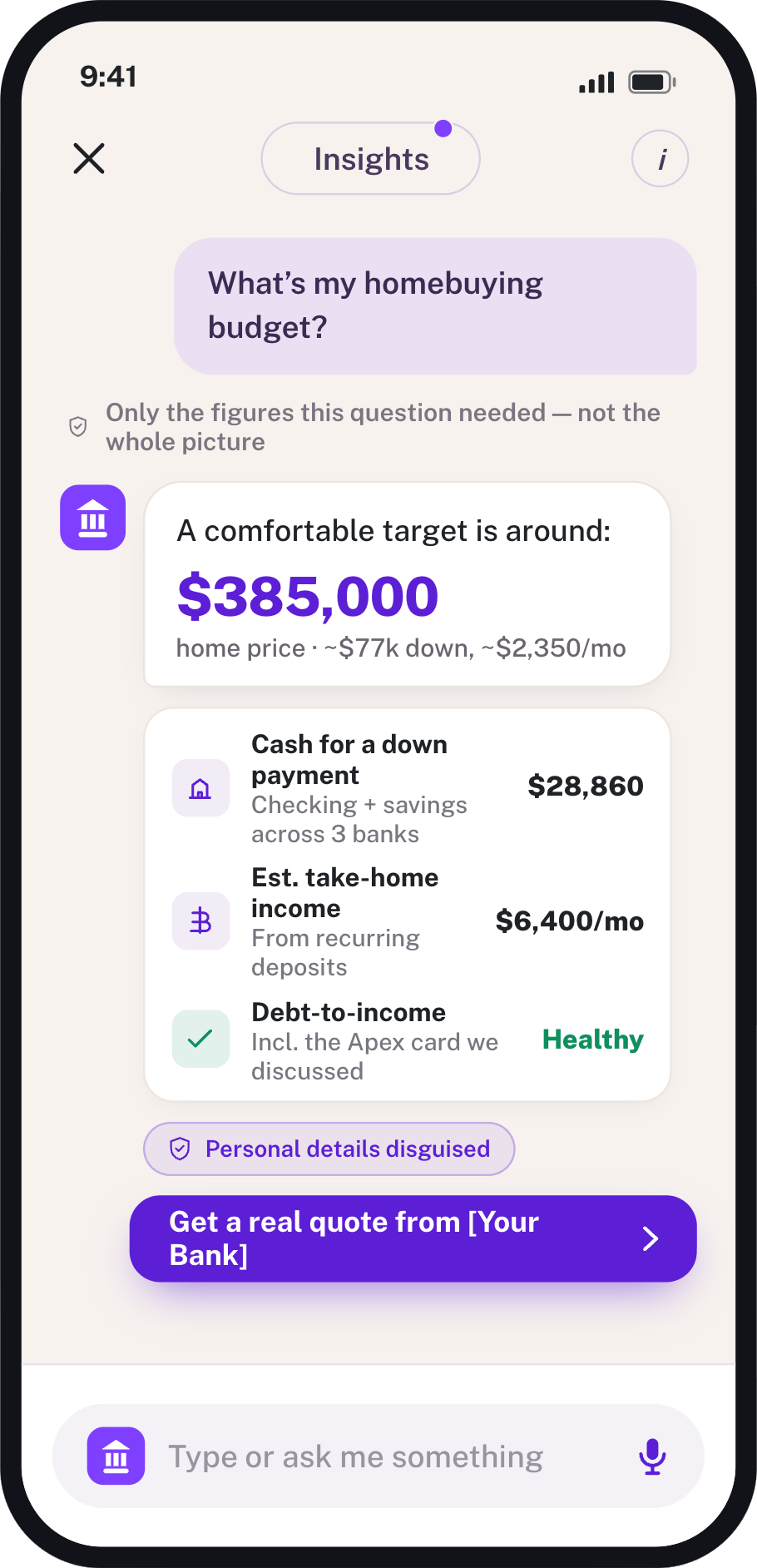
Bank app screen: the assistant answers 'What's my homebuying budget?' with a $385,000 target and a button to get a quote.
THE RISK
MARKETS  ▸  Meta's Muse agent drags down bank and brokerage stocks that depend on “consumer inertia”  ·  S&P 500 Financials −2.4% intraday  ·  Bloomberg, Sept 22, 2026
−2.4%
S&P 500 Financials, intraday low, Sept 22
$23T
in near-zero-interest checking balances that AI agents could move
~20%
of global bank profits at stake if just 5–10% of those balances move

Wall Street is now asking the same question we've been answering for years. Who does the agent work for?

Source: Bloomberg, Sept 22, 2026; McKinsey & Company, Global Banking Annual Review 2025, October 2025.

THE OPPORTUNITY

Banks can still own the customer relationship, if they move now.

Banks already hold the position of trust needed to remain the financial interface in the age of AI. What's missing is the conversational experience consumers now expect, delivered in a way that protects their financial data, and the bank's own IP.

62%
trust their primary bank
19%
trust a major tech company

to offer gen-AI financial services

A three-to-one trust advantage that banks need to capitalize on.

But 57% would consider a third-party AI agent if their bank doesn't offer one.

Source: McKinsey Global Banking Annual Review survey, May 2025 (n = 30,021).

INRUPT INSIDE

The AI customers expect, safely inside your app.

Your app now reasons across each customer's entire financial life, including data from 3rd-party sources. No new app or assistant to launch, no customer migration and no re-platforming of core systems.
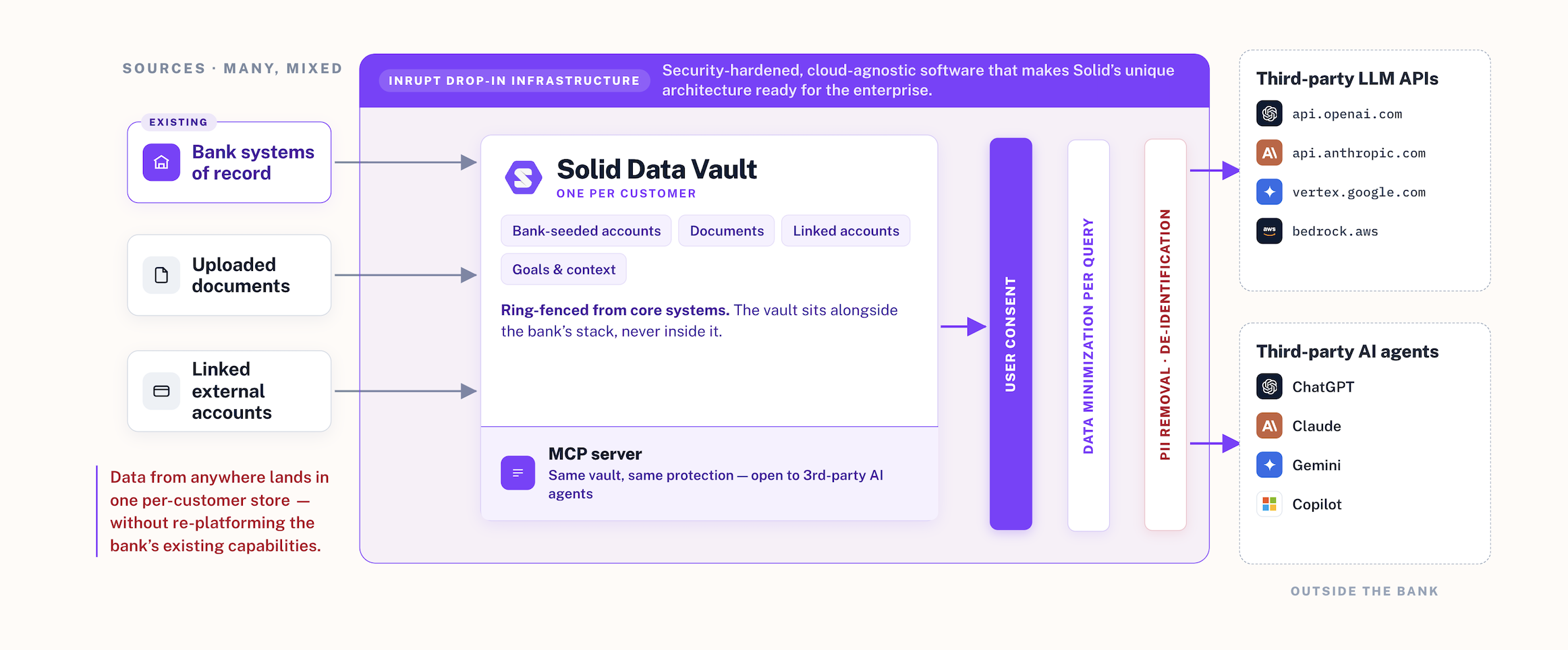
Drop-in infrastructure. You control your tech stack and data flows.

Architecture: bank systems, uploaded documents and linked accounts feed a per-customer Solid Data Vault with an MCP server; only consented, minimized, de-identified data passes to third-party LLM APIs and AI agents outside the bank.

Swipe to see the full architecture.

Data from anywhere lands in one per-customer store, without re-platforming the bank's existing capabilities. Protection is enforced by the architecture itself, not by contract terms with an AI vendor.

ILLUSTRATIVE: SCREENS FROM A BANK'S OWN APP
01 · DOCUMENTS

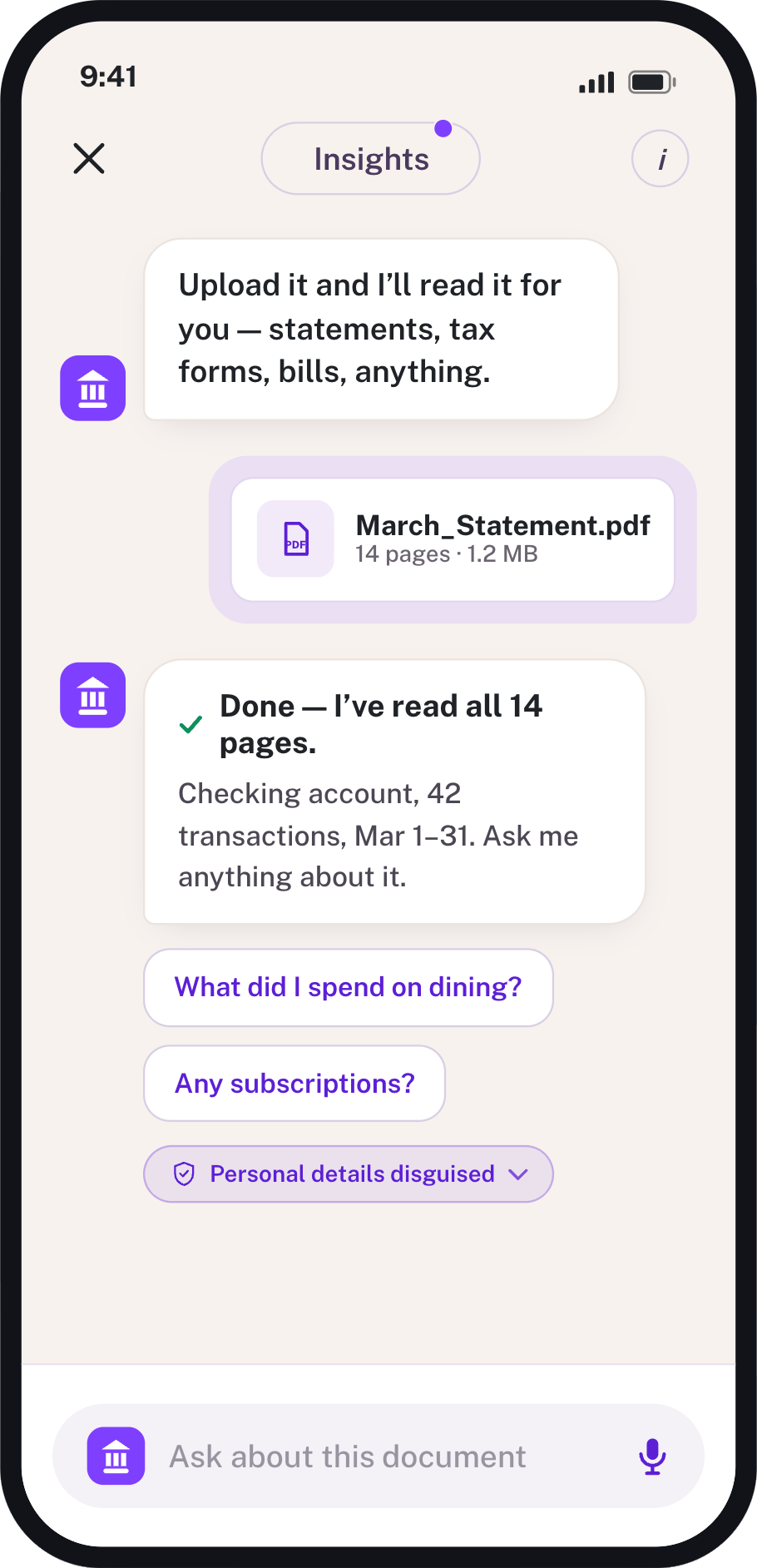
Answers questions about customer documents

A customer can ask anything about PDFs, documents or images, and your app reasons across the whole thing. When an external model is needed, PII is redacted and personal details are disguised, so the AI provider doesn't see customer data or bank IP.
Inrupt infrastructure inside
Solid Data Vault
MCP Server
→
User consent
Data minimization
De-identification
Purple: this capability powers the experience shown
Bank app screen: a customer uploads a 14-page statement and asks questions about it; personal details are disguised.
02 · ONE PLACE

All the right data, in one place

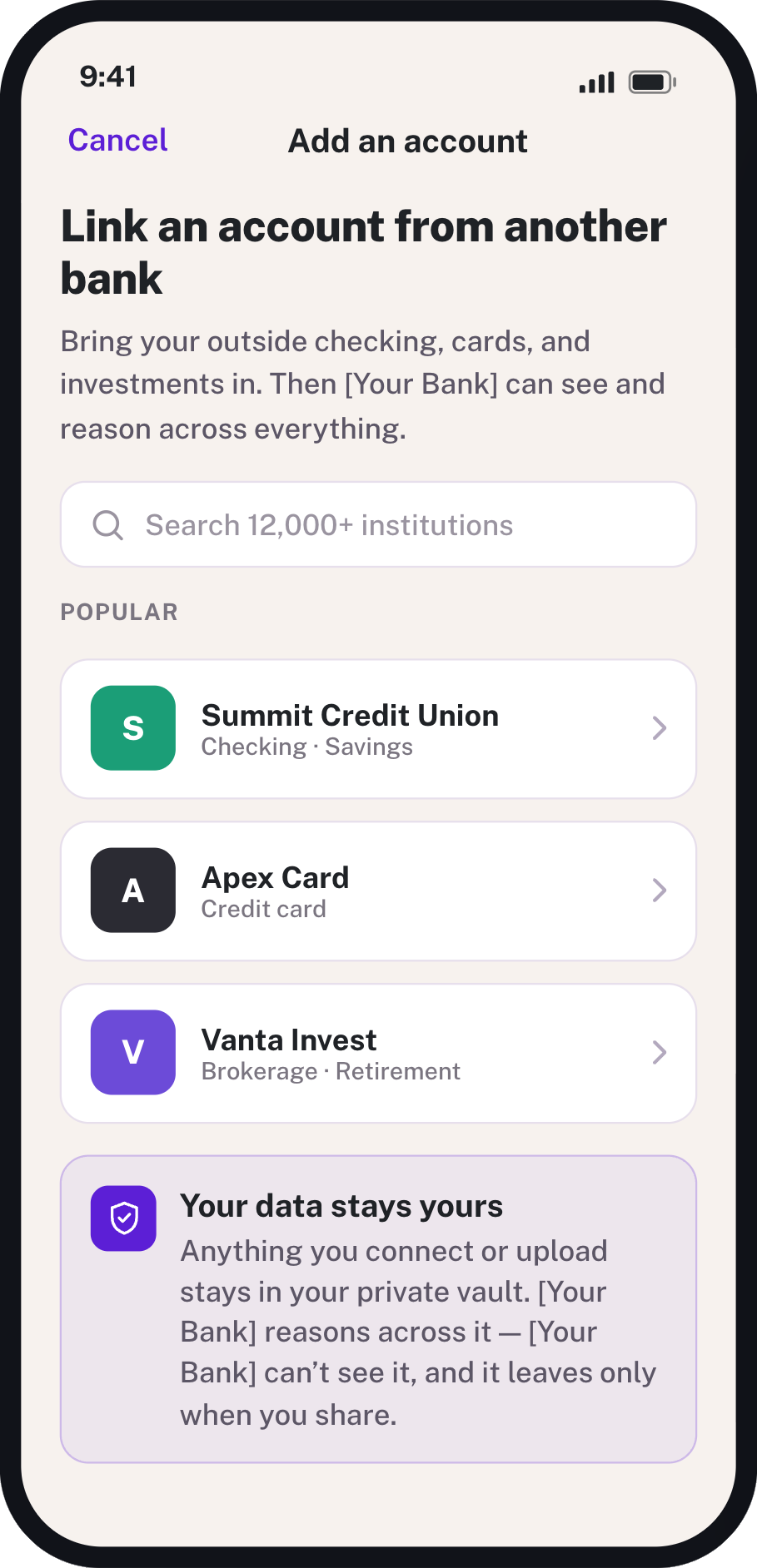
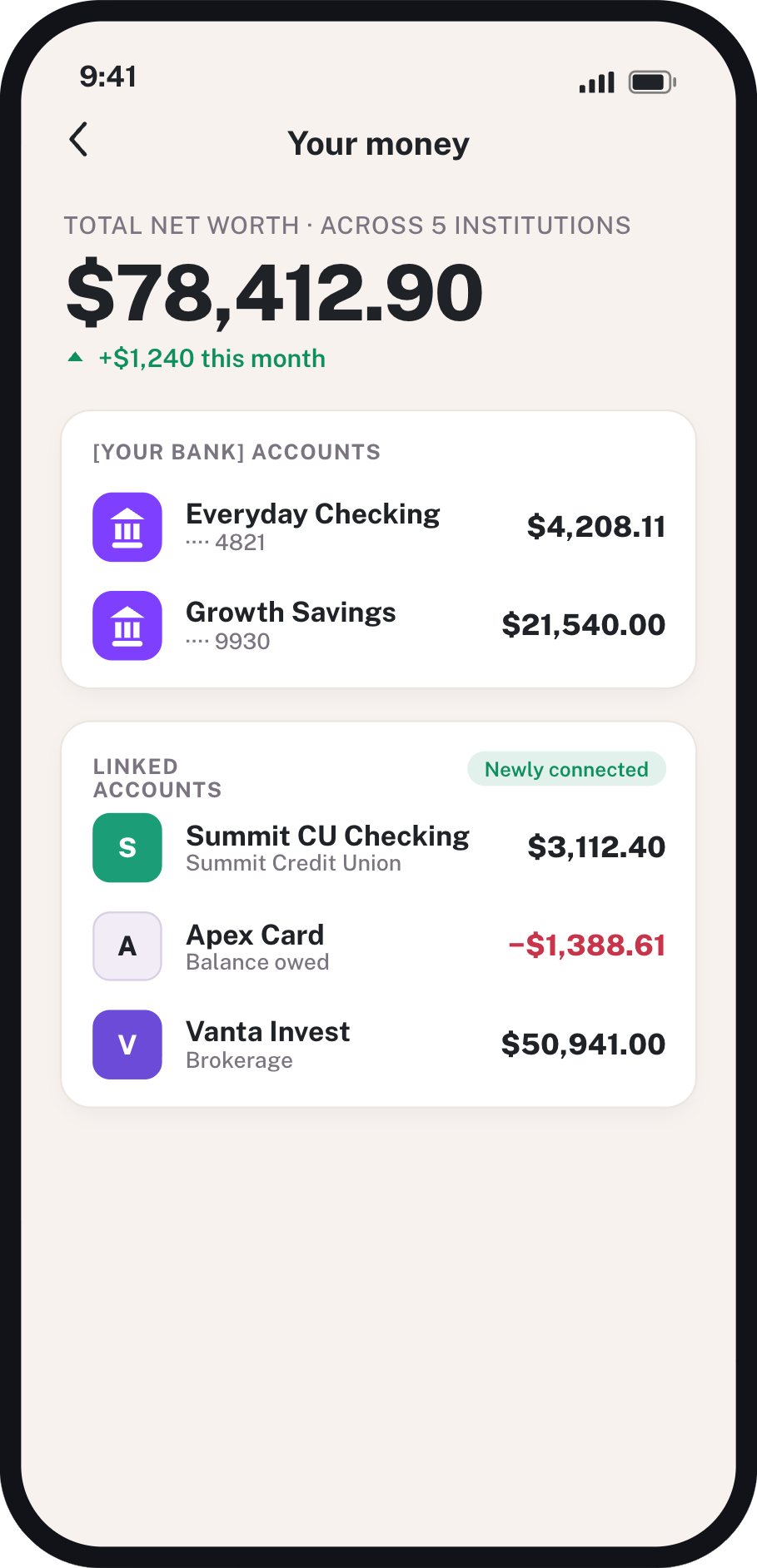
Link outside accounts and everything resolves into one net-worth number, all held in the customer's private vault. What customers bring in stays theirs: your bank reasons across it on their behalf, and it's shared only when they choose.
Inrupt infrastructure inside
Solid Data Vault
MCP Server
→
User consent
Data minimization
De-identification
Bank app screen: linking an account from another bank.
Bank app screen: total net worth across five institutions.
03 · REAL ANSWERS

Reasons across it all

A real homebuying answer, modeled from income, savings and debt, that remembers the earlier turns as the conversation goes on. Only the figures a question needs are used, and the next step is a real quote from your bank.

Inrupt infrastructure inside
Solid Data Vault
MCP Server
→
User consent
Data minimization
De-identification
Bank app screen: the assistant answers 'What's my homebuying budget?' with a $385,000 target and a button to get a quote.
04 · BEYOND THE BANK

Protect your customers, even on someone else's AI

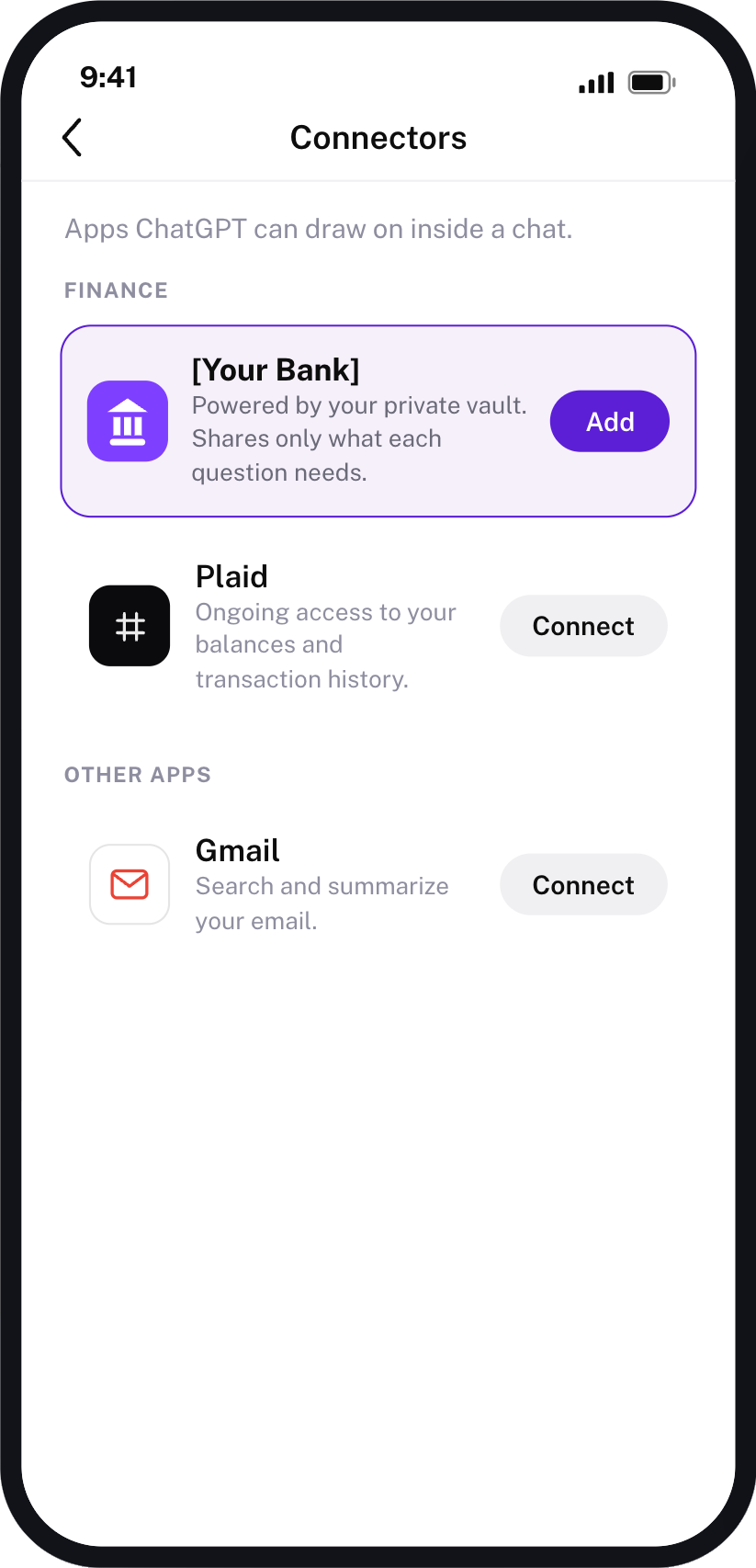
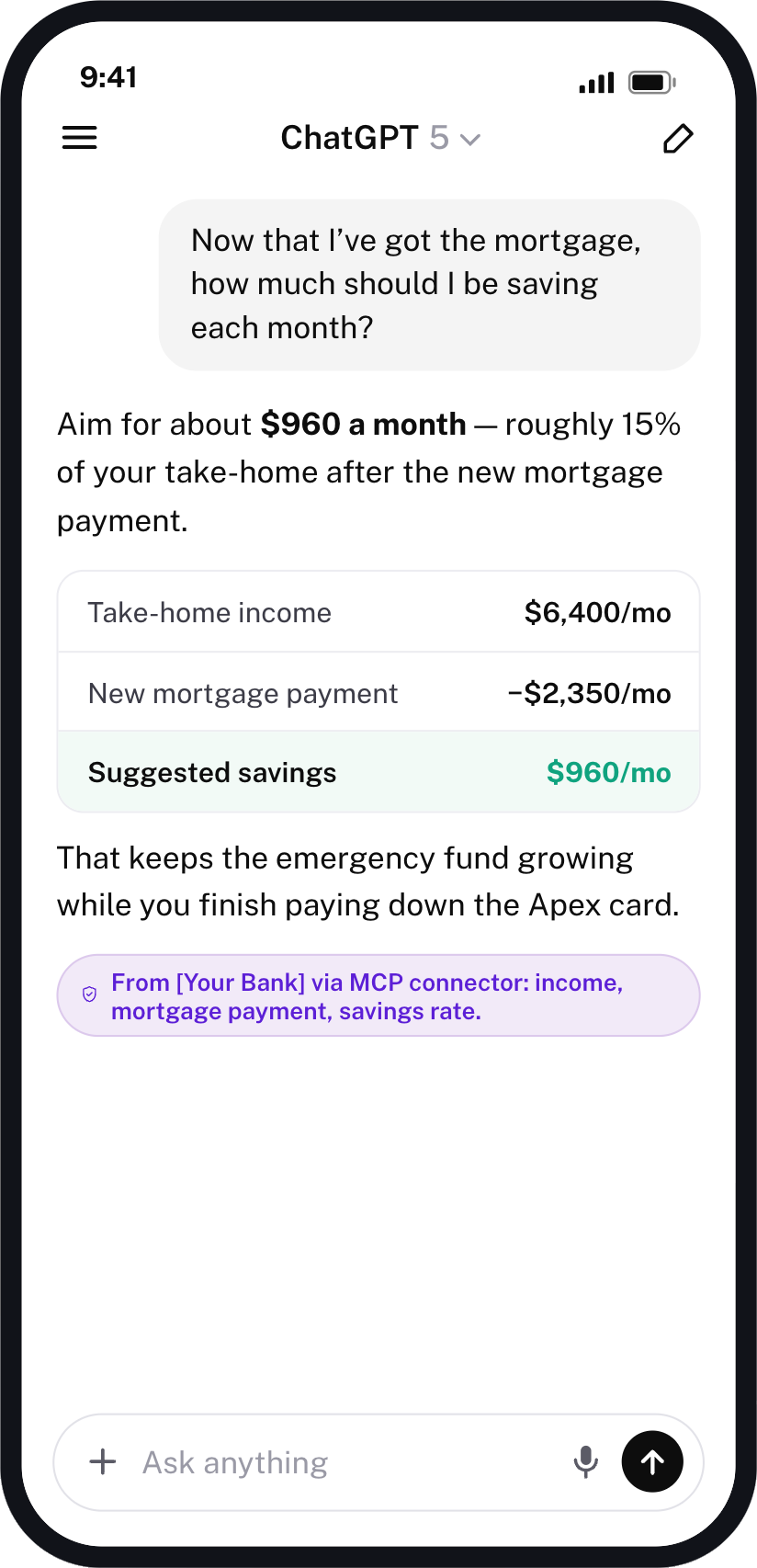
Some customers will use ChatGPT, or the next Muse, whatever you do. When your bank is the data steward they pick, your bank stays in the loop. Only the data needed to answer a question is shared, and any action on the customer's account runs through your bank, not an aggregator.
Inrupt infrastructure inside
Solid Data Vault
MCP Server
→
User consent
Data minimization
De-identification
ChatGPT connector list with the bank's own connector, powered by a private vault, listed above Plaid.
ChatGPT answers a mortgage savings question using figures shared through the bank's connector.
HOW IT WORKS

End to end, in five steps.

The UI is up to your bank. The same Inrupt capabilities are always at work underneath.

1

Connect the sources.

A private intelligence identifies and helps customers connect the accounts, files and feeds that matter.

2

Everything lands in the vault.

One data store per customer, ring-fenced from core systems but fed by them, and by new external sources of rich data the customer brings.

3

Review and approve OPTIONAL

Where the bank chooses to surface it, the customer sees exactly what's about to be shared and consents to its use for that purpose.

4

Minimize, strip, disguise.

Only the data points needed to answer a specific question are sent as context to AI models, with identifiers removed and values disguised.

5

The answer comes back.

A real answer grounded in the customer's own data. Chat history stays in the vault.

The strategic window for banks is open, but it won't stay open.

The bank that positions itself as the trusted steward of its customers' data and financial identity takes a position AI platforms can't challenge.

Request a demo

Thank you! Your submission has been received!
Oops! Something went wrong while submitting the form.